In active development · playable internal builds
Build a world · then a civilization

Astral Polity

Land on a planet and take it apart. Build ships voxel by voxel and break them against a mountain. Then play it on a server you own.

Scroll

A world that holds up
when you push on it

The goal is a universe that behaves the same whether you are admiring it, building in it, fighting over it or making a living from it — one physical model underneath, and no set dressing that comes apart when you look closely. Each of these is either running in the build today or is what the build is being shaped toward.

Photorealistic worlds

Eroded terrain, real biomes, weather and light — a planet that looks like a place, not a level.

Rivers cut by simulated erosion · HDRP lighting · no painted backdrops

Real physics, not animation

Hulls crumple where the energy lands. Nothing plays a canned destruction clip.

Kinetic energy is spent bending, tearing and heating metal

Orbital mechanics

Gravity actually pulls. Fly to orbit, and on to the moon, under Newton's rules.

n-body gravity · no invisible rails · no loading screen between ground and space

Engineering to the centimetre

Voxel hulls at 12.5 cm, every corner adjustable, every element placed by you.

1/120-voxel vertex precision · a canopy curves instead of stepping

Programmable ships

Script the elements you built, inside the game, and let the ship fly itself.

Control units, screens, radar and engines behind one scripting surface

Combat under the same rules

No separate damage system. What breaks a hull in a crash breaks it in a fight.

One physical model for collisions, weapons and reentry

Exploration below and above

Caves you open yourself by digging, and a moon to land on.

Cave systems generated through the crust · a walkable second body

Every job matters

Mining, refining, industry, hauling. No skill trees and no waiting timers: what you can do depends on what you have built.

Specialisation is infrastructure you can see — and can lose

Your server.
Nobody can switch it off.

I played the one that shut down. Dual Universe went dark on 27 August 2025 and the shared world ended with it — not because anyone was careless, but because of where the world was stored. One company’s servers, one shard. People could export blueprints of their own ships; what they could not take was the world those ships lived in, or anything anyone else had built in it.

So this one is built the other way round. The dedicated server is a free download and you run it — on your machine, on a rented box, on a machine in your own country if the route to mine is slow. Your worlds and blueprints are files on your disk. No subscription, and no “premium server tier” later. If this project disappears tomorrow, what you built is still a folder and a binary that still starts.

What follows from where the world is stored

Turn the field. Every point on it is a consequence of the world living on your machine rather than mine — including the one that matters most: you own what you build.

  • You own what you build — your worlds, ships and blueprints are files on your disk
  • No subscription
  • No season pass
  • No pre-orders
  • No founder packs
  • No always-online requirement
  • No account to run your own server
  • No ads
  • No NFTs
  • No blockchain
  • No publisher
  • No shareholders
  • No launch date I cannot keep

The honest status: this is the least finished system in the project. The networking layer is real code and it has never carried a real session. It is in the first release rather than deferred, and I will publish a measured player count long before anyone is asked to pay for anything. I would rather you read that here than find it out later.

A planet you can land on,
and take apart

Not concept art and not a pitch deck. These systems are in the build and they run together — one round world, ships assembled voxel by voxel, and physics that leaves marks you can walk back to.

● Playable

Build from the voxel up

Place, carve, paint, mirror and reshape. Vertex-level precision lets a hull curve instead of stepping, so a ship can look designed rather than assembled.

9 build tools · blueprints · symmetry · material palette
◐ In progress

Fly it, land it, crash it

Newtonian flight where mass, inertia and centre of gravity are derived from what you actually built. Put the engines in the wrong place and you will feel it. The flight model is implemented and the physics are real — what is not done is the rest of the loop: no ship has yet been flown end to end.

Custom rigid-body solver · aerodynamics · thrust from placed engines
● Playable

One continuous world

A 160 km-wide round planet — 80,425 km² of surface, within a few per cent of the area of Austria — with hydraulic erosion — rivers run downhill because water carved the valley they sit in. Oceans, a real day-night cycle, and 43 surface types the climate decides rather than an artist.

Floating origin · no zones · no loading walls
● Playable

Damage that means something

An impact has an energy budget, and it spends it on deformation, tearing and heat. A ductile hull folds where a brittle one shatters, because the material decides.

Voxel crumple · terrain craters · debris · heat & ablation
● Playable

Landscapes with a reason

Dissolved limestone builds karst plateaus and tower karst. Wind builds dunes. Mangrove and salt marsh settle where a river meets the sea, and oases sit in the desert depressions that cut below the water table.

Karst dissolution · dunes · oases · canyons · 43 surface types
● Playable

Atmosphere you can feel

Volumetric cloud, fog and morning mist over a sky driven by a real day-night cycle. The hull carries a thermal model that takes heat from impacts today; aerodynamic heating and ablation are written but have never yet fired in a session, so they are not claimed here.

Volumetric cloud · morning mist · real day-night cycle
◐ In progress

Survive the place

Atmosphere, temperature, injury and supply. The sealed-room test reads the geometry you actually built rather than a scripted volume — so a breach is found, not authored. Written and reviewed; not yet switched on in a build you can play.

Vitals · consumables · hermeticity from real geometry
● Playable

Water that goes somewhere

Rivers run as continuous ribbons from the highland where the rain lands to the sea that takes it, with lakes standing in the basins between. They are not decals painted on a heightmap — the same erosion that cut the valley decides where the water sits in it.

River network · lake surfaces · oceans · shoreline
● Playable

Ground you can walk into

Caves run under the terrain rather than being pasted onto it, lit by what you bring and shedding debris when you cut them. Karst country and cave systems are the same rock volume seen from two sides.

Cave volumes · carried light · debris on excavation
● Playable

The same boulder, every session

Rocks, trees, roots and ground clutter are placed by a rule — not by hand and not at random — so the same coordinates hold the same boulder on your machine and on your server. Close in, the game derives them as you move, because only scatter the runtime owns can be dug out and re-grounded; further out a baked catalogue streams the same placements in. Every path is required to agree with the others bit for bit, which is why you cannot see where one ends and the next begins.

Seed-deterministic placement · streamed catalogue · impostor belts · GPU instancing
◐ Being measured

Frame rate, treated as a feature

A voxel planet with real erosion and destructible hulls is easy to make beautiful and hard to make fast, and the second one is the actual engineering. The work runs against measured captures rather than impressions — the last round took a walking frame from 16.6 ms to 12.7 ms, a 23.6% cut, verified twice on independent readings. It is not finished, and the target is a smooth frame on a machine that is also doing other things.

Per-frame capture · A/B arms in one build · no claim without a number

Most games in this genre ask you to accept the world.
This one lets you argue with it.

Design principle · no. 1

Simulated, not staged

The genre is full of worlds that look right until you push on them. The bet here is that if the underlying model is honest, everything downstream — combat, industry, survival, economy — gets more interesting for free.

01

Detail you can actually use

12.5 cm voxels with 1/120-voxel vertex precision. That is fine enough to shape a cockpit canopy, a landing skid or a weld seam — not just a box with a box on it.

02

Damage from physics, not tables

A collision has kinetic energy, and it is spent: bending metal, tearing it, and heating it. The same model gives you crumple zones, reentry ablation and craters — because they are the same problem.

03

Terrain with a history

The planet is run through hydraulic erosion before you ever see it. Valleys exist because water cut them, so the landscape reads as a place rather than as noise.

04

Your ship's behaviour is your fault

Mass, inertia tensor and centre of gravity come from the voxels and elements you placed. There is no handling stat to tune — you tune the ship.

05

Sealed means sealed

Life support is designed to read the geometry you built: a room holds pressure if it is genuinely closed, and a breach is found by the simulation rather than scripted by me. This one is written and not yet live — it is on this list as a principle, not as something you can go and do.

06

Built in the open, in order

Every part depends on another. We publish where we actually are, including the parts that are not done — the map below marks our real position.

Two systems, opened up

The planet and the damage model each get their own page, with the real numbers and the reasoning behind them. Both are live now — open either one.
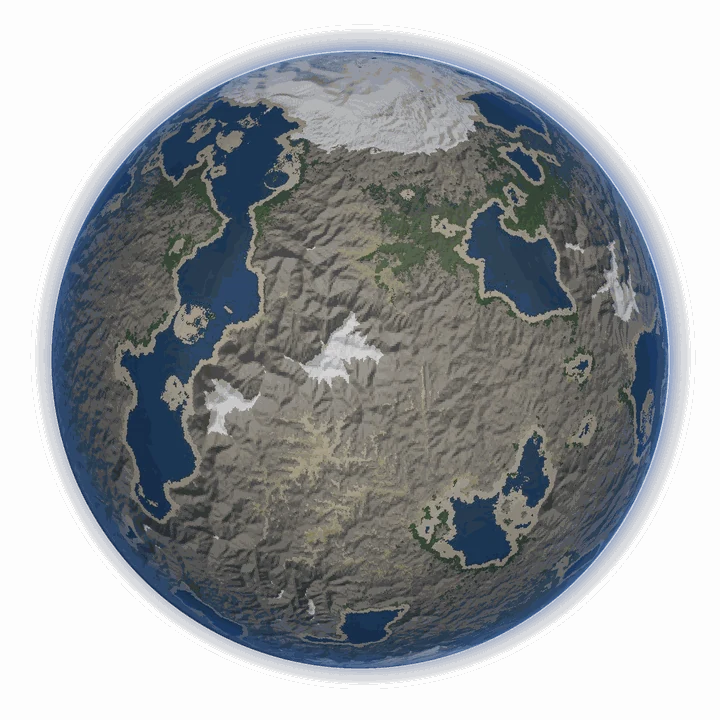
The generated world seen from orbit: a polar ice cap, inland seas and eroded mountain ranges

How the planet is built

The world is not painted, it is simulated. Tectonic uplift, then rivers cutting by stream power, sediment filling the basins behind them, ice grinding above the snow line, and biomes settling out of the temperature and rainfall the terrain itself creates. Every law is published with its citation, and the globe on that page is the actual shipped bake — rotate it, move the sun, and hover any surface to see which process shaped it.
160 kmacross
80,425 km²surface
43surface types
Explore the planet
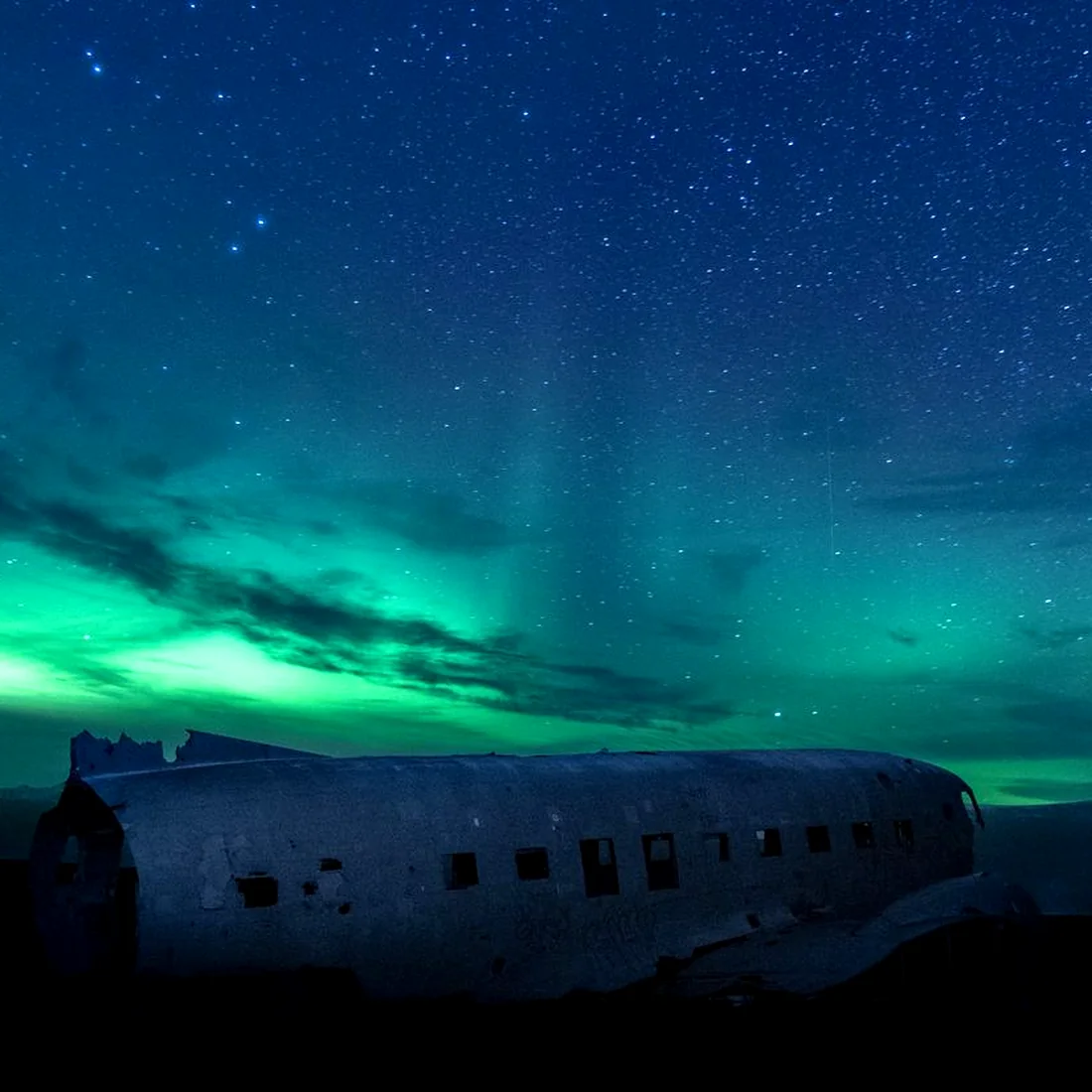
A stripped aircraft fuselage lying on black sand under a green aurora and a dense starfield

How damage is decided

Nothing here has hit points. An impact arrives with an energy budget and spends it — on folding metal, on tearing it, on throwing fragments, on heat, and on the hole it digs in the ground. When the budget is gone the damage stops. What the material is decides whether it bounces, folds, grinds or comes apart.

0hit points
43ground materials
Read the damage model

The scale of it

One planet, eighty kilometres in radius —
and every metre of it the same voxel

The ground you stand on, the hull you fly, and the hole you leave in both are the same material, resolved the same way. Nothing here is a backdrop.

The whole build, on one axis of time

Every system in the game on a single field. It is narrowest at the present and opens out in both directions: what already runs is below you, what is being built passes through the waist, and what is designed but not yet written is above. Drag it around, and tap any point to read what it is.

  • Planet bake — Playable now — in the build today — Offline generation of the whole world — erosion, rivers, biomes, climate — baked to a blob the runtime streams.
  • Baked field sampling — Playable now — in the build today — The seam every consumer reads the world through: height, biome and river lookups against the baked blob.
  • Erosion solvers — Playable now — in the build today — Five coupled erosion models — fluvial, thermal, hillslope and glacial — run over the heightfield before anything is drawn.
  • Flow routing — Playable now — in the build today — Where water goes: drainage accumulation and depression filling over the whole sphere.
  • Rivers — Playable now — in the build today — Meander carving, the river field artifact and the ribbon surfaces drawn on top of it.
  • Lakes — Playable now — in the build today — Standing water in basins the flow solver could not drain, and the surfaces that render them.
  • Ocean — In progress — works, still being finished — The curved ocean surface, the sea-level datum, and the submersion query every other system asks.
  • Coasts & reefs — In progress — works, still being finished — Beach profiles, wave energy along the shore, and coral growth in the shallows.
  • Tectonics & landforms — Playable now — in the build today — The large structures under everything else: terranes, volcanoes, impact craters and island arcs.
  • Karst & dissolution — Playable now — in the build today — Limestone dissolution: karst plateaus, tower karst and the provinces that decide where they occur.
  • Caves — Early — started, not yet playable — Cave networks carved into the voxel field.
  • Ore bodies — Early — started, not yet playable — Deterministic ore placement through the crust, keyed to lithology rather than sprinkled.
  • Biomes & ground materials — Playable now — in the build today — What each surface is made of, and the single authority every other system derives its answer from.
  • Climate & weather — In progress — works, still being finished — Temperature, rainfall and wind — the fields the biome classifier reads, and the weather a player feels.
  • Voxel terrain — Playable now — in the build today — The near-tier terrain a player stands on, digs and builds into. Streams chunks around the observer.
  • Meshing & CSG — Playable now — in the build today — Turning a signed-distance field into triangles, and the brushes that cut it.
  • Terrain edits & persistence — In progress — works, still being finished — Every change a player makes to the ground, stored as a sparse delta over generated content.
  • Far terrain LOD — Playable now — in the build today — Everything beyond voxel reach: the planet seen from orbit, and the seam where it hands over to voxels.
  • Colour bake & streaming — Playable now — in the build today — The baked surface colour the far tier paints from, streamed by face and mip.
  • Scatter & vegetation — Playable now — in the build today — Placement bake, streaming, instancing and culling for every plant, rock and prop on the surface.
  • Impostors & billboards — Playable now — in the build today — The far-distance stand-ins that let a forest cost almost nothing.
  • GPU grass — Playable now — in the build today — Ground cover drawn entirely on the GPU, on its own path from the scatter engine.
  • Day / night & sky — Playable now — in the build today — Sun and moon motion, the night sky, and the lighting cycle everything else keys off.
  • Fog & mist — Playable now — in the build today — Valley fog and the morning mist that sits in low ground after a cold night.
  • Volumetric water — In progress — works, still being finished — Cellular-automata water you can dig a canal into, plus the underwater optics and screen-space fluid.
  • Construct grid — Playable now — in the build today — The voxel hull of every ship and station: what it is made of, what it weighs, where its centre of mass is.
  • Build & edit tools — Playable now — in the build today — Placing and removing voxels and elements, mirroring, symmetry, the deploy wheel. The largest file in the project.
  • Damage model — Playable now — in the build today — An impact arrives with an energy budget and spends it: bending, tearing, heat and the hole it digs.
  • Fracture & crumple — Playable now — in the build today — Voronoi fracture of a real mesh, crumple at the rim, and the crater left in the ground.
  • Debris field — In progress — works, still being finished — GPU-simulated chunks thrown off by an impact, promoted to real physics bodies when they matter.
  • Reentry & ablation — In progress — works, still being finished — Skin heating from speed and air density, and the hull material burning off above its tolerance.
  • Aerodynamics — Playable now — in the build today — Drag, lift and centre of pressure computed from the shape actually built.
  • Elements & engines — Playable now — in the build today — The placeable parts — engines, wings, containers, seats — and the power they draw.
  • RCS & attitude — Playable now — in the build today — Physical attitude control: adjuster elements fire real thrusters instead of applying magic torque.
  • Blueprints & import — Playable now — in the build today — Saving a construct, loading it back, and importing hulls from outside.
  • Collision meshing — Playable now — in the build today — Cooking collision geometry for a construct off the main thread, so building does not hitch.
  • Contact & collision — In progress — works, still being finished — Detecting that a hull has touched the world and resolving it without tunnelling or floating.
  • Inventory & containers — Playable now — in the build today — Volume- and mass-constrained containers with fixed-point quantities, faithful to the source game’s model.
  • Flight model — Playable now — in the build today — Newtonian ship flight under radial gravity — thrust, inertia, atmosphere and orbital motion.
  • Avatar & camera — Playable now — in the build today — Walking, jumping, foot placement and the camera on a curved world.
  • World map — Playable now — in the build today — The full-planet map with drag-spin, waypoints, bookmarks and points of interest.
  • Minimap & HUD readouts — Playable now — in the build today — The round minimap with velocity zoom, and the flight readouts around it.
  • HUD shell & menus — In progress — works, still being finished — The AR-HUD shell every menu is drawn into, and the input guard that stops typing firing hotkeys.
  • Weapons & FPS — Early — started, not yet playable — Hand-held weapons, aiming and firing on foot.
  • Survival & vitals — In progress — works, still being finished — Vitals, injury, conditions that chain into each other, and the air you are breathing.
  • Under-planet rescue — Playable now — in the build today — The guard that puts a player back on the surface when they end up beneath the world.
  • Inspect & torch — Playable now — in the build today — Pointing at something and being told what it is, plus the light you carry.
  • Asset gallery — Playable now — in the build today — The in-engine browser for every scatter asset, biome and material — the tool the art is judged in.
  • Industry & machines — Early — started, not yet playable — Refineries, assemblers and the production tick that moves material through them.
  • Recipes & crafting — Early — started, not yet playable — What turns into what, at what cost, and the jobs that track it.
  • Harvesting — Early — started, not yet playable — Turning the world into materials: trees to wood, rock to stone, ore to metal.
  • AI & agents — Early — started, not yet playable — Utility brains, perception, spatial indexing and the deterministic tick underneath anything that acts.
  • Creatures — Early — started, not yet playable — Fish, herds and the flocking that makes a world feel inhabited.
  • Rights & territory — In progress — works, still being finished — Who may build, fly, take or destroy what — the permission layer over every shared object.
  • Programmable elements — Early — started, not yet playable — The scripting surface a player will program their ship through, and that NPC brains already fly through.
  • Wire protocol — Early — started, not yet playable — Commands, serialisation and the transport interface — engine-agnostic, with no Unity types on the wire.
  • Server host — Early — started, not yet playable — The authoritative host process, its pump and the UDP transport underneath it.
  • Interest & bandwidth — Early — started, not yet playable — Deciding what each player needs to be told about, and staying inside a byte budget while telling them.
  • Rewind & reconciliation — Early — started, not yet playable — Replaying the recent past so a shot fired on a laggy client can be judged fairly on the server.
  • Render pipeline — Playable now — in the build today — HDRP configuration, the submission paths, and the settings a player actually changes.
  • VFX — In progress — works, still being finished — Tree bursts, grind sparks, butterflies, fireflies and impact effects.
  • Engine plumes — In progress — works, still being finished — Exhaust: flipbook cores, outwash against the ground, and throttle response.
  • Audio engine — In progress — works, still being finished — Mix buses, biome ambience, ship and impact sound, and the loudness standard over all of it.
  • Voice & chat — Early — started, not yet playable — Proximity voice, radio channels and text chat with coordinate sharing.
  • Solar system — In progress — works, still being finished — Vacuum flight, the n-body sun/planet/moon system, and the maps that navigate it.
  • Gas giant & rings — Playable now — in the build today — The layered gas giant and a physical ring you can fly into and crash on.
  • Warp & travel — Early — started, not yet playable — Moving between systems, and generating the ones you have not visited.
  • Materials & texturing — Playable now — in the build today — Build surfaces with real density, strength and heat limits, and the texture banks that draw them.
  • Single-shard world — Planned — designed, not yet built — One persistent universe every player shares, rather than instances.
  • World persistence — Planned — designed, not yet built — Storing what players changed so the world survives a restart, as deltas rather than a world dump.
  • Player identity — Planned — designed, not yet built — Accounts, ownership of a character, and who a given input belongs to.
  • Economy — Planned — designed, not yet built — Scarcity, pricing and the consequences of specialising.
  • Markets & trade — Planned — designed, not yet built — Player-to-player trade, contracts, and the routes that emerge between them.
  • Missions & contracts — Planned — designed, not yet built — Reasons to go somewhere, given by factions or by other players.
  • Factions & reputation — Planned — designed, not yet built — Standing with the groups that hold territory, and what it unlocks or closes.
  • Player scripting — Planned — designed, not yet built — A programming layer for players — autopilots, factory controllers, custom HUDs.
  • Playable now — in the build today
  • In progress — works, still being finished
  • Early — started, not yet playable
  • Planned — designed, not yet built

The questions you were going to ask

Including the awkward ones.

When can I play it?

There is no date, and we will not invent one. The map above is sequenced rather than scheduled: it shows where we actually are, and each piece ships when it genuinely works. The development log is the honest version of "when" — it says what shipped and what broke.

Is this multiplayer?

Yes — in the first release, rather than as something you are asked to wait for. It is also the least finished system in the project today, and I would rather say that here than let you find out later.

What it means concretely: a dedicated server you download for free and run yourself, for a group of people, at a player count I will publish as a measured number long before anyone is asked to pay for anything. What it does not mean is one enormous shared universe with everybody in it. That is the promise this genre keeps making and then burying, and I am not making it.

Can I pre-order or buy early access?

No. There is nothing to buy, no crowdfunding, no founder pack and no countdown. If that changes it will be because there is a game worth charging for.

What is it built on?

Unity 6 with HDRP, and a large amount of custom work underneath: the voxel construct system, the terrain generator, the rigid-body solver and the damage model are all purpose-built, because nothing off the shelf does this at this resolution.

Will it run on my machine?

Too early to promise anything specific. Performance is an explicit phase 1 deliverable rather than an afterthought — the current work is on rendering cost at construct scale, and it is being measured rather than guessed at.

How is this different from the games it will be compared to?

Higher resolution, and a simulation that decides more of the outcome. Twice the voxel detail with sub-voxel vertex shaping, damage computed from an energy budget rather than a hit-point table, terrain shaped by simulated erosion, and life support that reads the geometry you actually built. The intent is not a bigger feature list — it is fewer places where the world stops being real.

Get the development log

Written, technical, and specific. What shipped, what broke, what we believed before we were proven wrong, and the measurement that settled it — with the numbers in, not rounded off. If you want to know how a thing actually works, this is where that gets written down.
Astral Polity key art: a laurel emblem over a distant city, with ships above it
Key art — an illustration, not gameplay. The only in-engine image on this page is the planet above.
Help it exist

Back it on Patreon

This is one person and no publisher. A few euros a month buys the time that turns designs into builds — and supporters get the work-in-progress posts, the technical write-ups and a private corner of the Discord.

Support on Patreon

Build some of it

If you are a 3D artist, a sound designer or a visual artist and this is the kind of project you have been looking for — your help is genuinely wanted, and it will be credited. Write to contact@astralpolity.com or find me on Discord.

Join the Discord

Or just tell someone

If money is not on the table, this costs nothing and matters more than it sounds: send the site to one person who would like it. A project like this lives or dies by word of mouth long before it has a shop page.

Watch the devlog